Plumbing advice
What happens during a complete shower replacement and waterproofing rebuild?
A complete shower replacement can involve more than changing the tray and enclosure. Depending on the condition of the existing installation, the work may include removing damaged materials, checking and rebuilding walls or floors, planning the pipework and waste, installing a suitable waterproofing system and fitting the finished shower. The key is to ensure the construction behind the finished surfaces is sound, properly supported and protected against water. Not every shower needs a full rebuild: the scope should follow an inspection.
Nigel carries out domestic plumbing and bathroom work in Guildford and surrounding Surrey areas. The Merrow ensuite project linked below records a complete refurbishment he carried out, including the preparation behind the finished surfaces.
When a shower needs more than a new enclosure
A leaking shower, loose tiles or a moving tray can make a simple replacement look attractive. But a new enclosure cannot put right a weak base, an unsuitable wall build-up or a leaking waste hidden underneath. The first question is what is failing and how far the affected construction extends.
Not every shower needs a full rebuild. If the supporting structure, waterproofing and connections are sound, a smaller repair or replacement may be possible. The scope should follow an inspection, with hidden conditions explained when they become visible.
What should be checked before ordering fittings?
Measure the finished opening as well as the old tray. Tiles and wall finishes reduce the space available, and enclosure adjustment ranges vary by model. Check the proposed tray shape, door opening, access and the manufacturer’s dimensions together.
The water supply and waste arrangement matter too. A shower valve must suit the actual hot and cold supplies and operating conditions. The waste route, available fall, trap position and future access need checking before committing to the tray height or layout. A photograph cannot establish all of these details.
Opening up the old installation
Once the relevant supplies are safely isolated, the old fittings and affected finishes can be removed to reveal the construction. This allows the installer to inspect the tray support, wall framing or masonry, board condition and accessible pipework.
Visible damp or dark marking is a reason to investigate, but appearance alone does not prove a particular leak or condensation cause. Damaged materials, drying needs and ventilation should be assessed before the area is closed again. A persistent moisture or structural problem may need specialist input.
Rebuilding the support and planning access
The tray needs the support specified by its manufacturer. Walls also need a sound substrate suitable for the chosen boards, tiles and fittings. Any repair or reconstruction should be agreed before finishes conceal it.
A heavy glass enclosure needs a fixing arrangement appropriate to its weight and the actual wall construction. Tiles and lightweight backing boards alone should not be assumed to provide adequate structural support. Depending on the enclosure manufacturer’s requirements and the wall construction, suitable framing, structural backing or another approved fixing arrangement may be needed. Fixing positions and any penetrations through waterproofed surfaces should be planned before boarding and tiling, with the waterproofing maintained around them. Access to serviceable fittings should be planned rather than discovered after tiling.
Waterproofing is a system, not just a board
A waterproof board can be part of the solution, but the installation also has joints, corners, fixings, pipe penetrations and a junction with the tray. Those details need the treatment specified for the selected system. Products should be compatible and installed to their current instructions.
For example, Marmox describes Multiboard as having a waterproof core and provides joint-sealing products. That does not mean every board joint or connection becomes waterproof without the specified treatment. Do not assume that the same detailing applies to another board or tray.
The shower tray-to-wall junction is a particularly vulnerable area because water can reach the edge of the tray and movement can affect seals. It must be detailed as part of the selected waterproofing system, following the relevant board, tray and waterproofing manufacturers’ instructions and using compatible sealing tapes, membranes or junction components where specified. A visible bead of silicone may form part of the finished seal, but it should not substitute for the underlying waterproofing design. Tiles and grout are not the sole waterproof barrier. Curing and drying times depend on the actual waterproofing, adhesive, grout and sealant products and site conditions.
Plumbing, tiling and the final checks
Supply connections, valve compatibility and the waste should be checked while they remain accessible. Before pipework or waste joints are concealed by boards, tiles or boxing, accessible connections should be checked for leakage and the waste should be tested for correct drainage using an appropriate method. Once the tray, waterproofing and tiled surfaces are ready, the enclosure and fittings can be installed and sealed according to their instructions.
Allow the specified curing time before using the shower. The final checks should include operation of the shower, drainage, accessible supply and waste connections, enclosure seals and door operation, with attention to any signs of leakage. A successful initial check does not remove the need to maintain seals, keep the waste clear and investigate future changes.
A real example: the Merrow ensuite
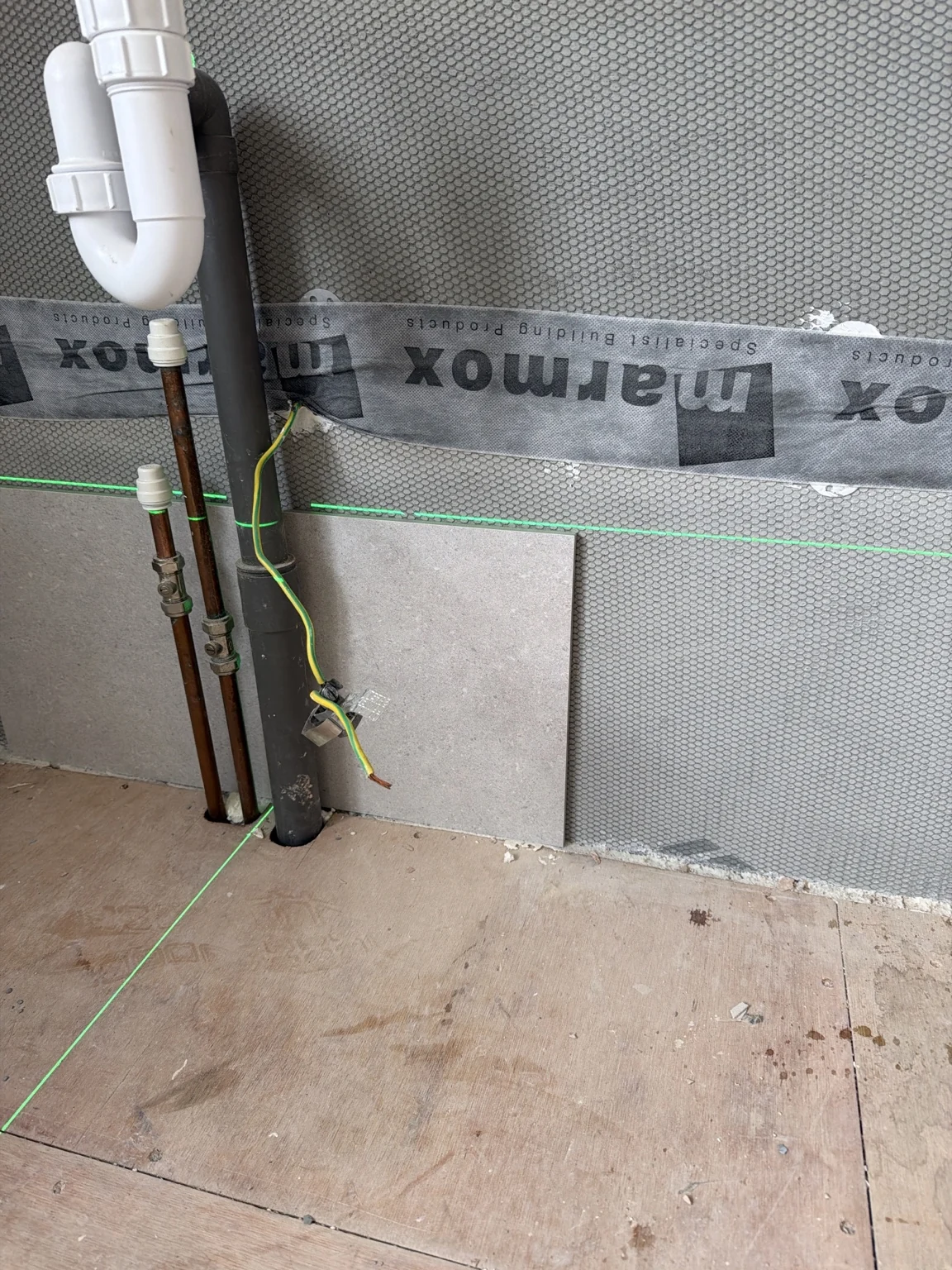
In Nigel’s published Merrow, Guildford ensuite project, strip-out revealed problems with the existing wall and insulation build-up, including visible mould in affected areas. Nigel stripped back the affected construction and rebuilt the wall build-up, rather than covering it with a new finish.
The recorded work included Marmox waterproof building boards, sealing and waterproofing at joints and vulnerable areas, plumbing, the shower tray and fittings, WC, basin and vanity, heated towel rail, tiling and flooring. The published case study shows the preparation and finished room in nine genuine photographs. It does not claim a definitive mould cause or specialist mould remediation.
What should a quotation explain?
Ask what is included in strip-out and disposal, supporting construction, waterproofing, plumbing, tray and enclosure fitting, tiling and making good. Clarify which fittings you are supplying and whether the quoted scope assumes the existing walls and floor are sound.
Hidden damage can change the work. Agree how findings and additional costs will be discussed before extra work proceeds. The duration depends on the extent of the rebuild, access, drying and product curing requirements; one project’s timescale is not a reliable promise for another.
Safety considerations
This guide explains the considerations for planning work; it is not a step-by-step installation instruction. Do not remove fittings or open construction just to provide photographs.
Stop using a shower if a leak may be reaching electrics. Keep clear of wet electrical equipment and obtain appropriate professional help. Electrical shower work and bathroom electrical alterations need a competent electrician and any applicable certification.
Gas appliances, gas pipework and boiler gas work require an appropriately qualified Gas Safe registered engineer. Nigel Harvey Plumbing does not claim Gas Safe, WaterSafe or WIAPS registration. Unvented hot-water safety controls and discharge pipework need a suitably competent specialist; do not bypass or adjust them.
Homeowner questions
Can I just replace the silicone?
A failed visible seal may be repairable, but new silicone will not correct a moving tray, a leaking waste or damaged construction. The cause needs checking before deciding that resealing is enough.
Do all shower replacements need new walls?
No. Reuse depends on the condition and suitability of the supporting construction and waterproofing. The inspection determines what needs repair or replacement.
Should I order the enclosure before a visit?
It is safer to confirm the finished opening, tray compatibility and adjustment range first. Send the proposed product details so the dimensions and installation requirements can be checked.
See the work behind the advice
These are completed projects, with genuine photographs and the recorded work.
Help with your shower or bathroom
Send a short description, your postcode and photographs of safely visible areas. Nigel can discuss whether a visit is needed.
Discuss your plumbing jobFurther reading
Check the current instructions for the actual products selected for your installation.